
SHEET S-03 / INTERIOR ALTERATION
Interior Alteration
Interior alteration in an occupied property is a logistics problem as much as a construction problem. Landmark builds around your tenants, not through them.
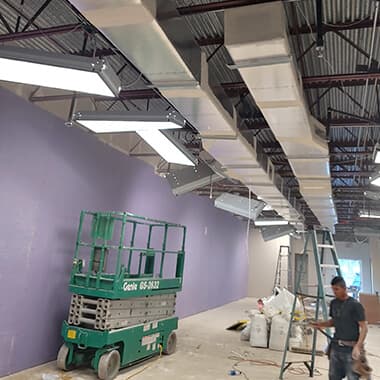
Work in a live retail center or office property gets sequenced, contained, and scheduled so neighboring tenants stay open and customers keep walking past. Dust containment, protected paths of travel, and after-hours phases are planned before demolition starts.
Because framing, drywall, and demolition are self-performed, the noisy and dusty phases stay under Landmark supervision and on Landmark timelines.
SCOPE INCLUDES
- 01Tenant and property-manager coordination plan
- 02Containment and protection of adjacent spaces
- 03Self-performed demolition, framing, and drywall
- 04After-hours and phased scheduling where required
- 05Permits, inspections, and close-out documentation
NOTES / FREQUENTLY ASKED
Can neighboring tenants stay open during construction?
Yes. Work is sequenced and contained specifically so adjacent tenants keep trading, with noisy or dusty phases scheduled around their hours.
What drives the timeline on an interior alteration?
Scope, permitting, and lead times on materials like storefronts and mechanical equipment. Landmark commits to a schedule before contract and manages to it.
Do you handle the permits?
Yes. Permitting and inspections are managed inside the contract, including ADA compliance review.
How do you control dust and noise in an occupied building?
Physical containment, negative air where appropriate, protected paths of travel, and scheduling the loud work when the property is quiet.
One call. Full scope.
Request a QuoteGeneral Contracting →Design Build →Facilities Maintenance →Painting →